

Pick one up and your arm braces for eight pounds but only gets four and a half.
The Parker Fly has been doing that to people since 1993.
I have dabbled in music, guitar in particular, for decades, yet I had never heard of the Fly until an industrial designer friend of mine raved about it.
He called it “the designer's guitar.”
It was the work of two men who spent the better part of a decade arguing about what was wrong with the electric guitar. Ken Parker was a luthier from Long Island who built his first instrument, out of wood and cardboard, at thirteen. Larry Fishman made pickups. They met in 1984.
Their complaint was structural. A solid body guitar is heavy because its wood has two jobs at once: make the sound, and hold the whole thing together against the pull of the strings.
Parker's answer came from the lute, and then from a speedboat.
He first tried stiffening a thin body with a hardwood shell. The wood fought him and the results were poor. A friend who built boats out of carbon fibre suggested he try that instead.
The result is best described as an exoskeleton. A slim core of spruce, poplar, basswood or mahogany, glued up, then wrapped in carbon and glass fibre set in epoxy. The skin carries the load. The wood is left free to ring.
Everything else followed from that. With the shell doing the structural work, the neck could melt into the body with almost no heel, and all 24 frets were in easy reach. The fingerboard was composite too, stiff enough that the truss rods added later were widely taken as reassurance for sceptical buyers rather than a necessity.
The frets were stainless steel, glued on rather than hammered in, well before stainless became a selling point anywhere else. The vibrato was Parker's own design on a flat spring. It could float, dive only, or be locked down as a hardtail.
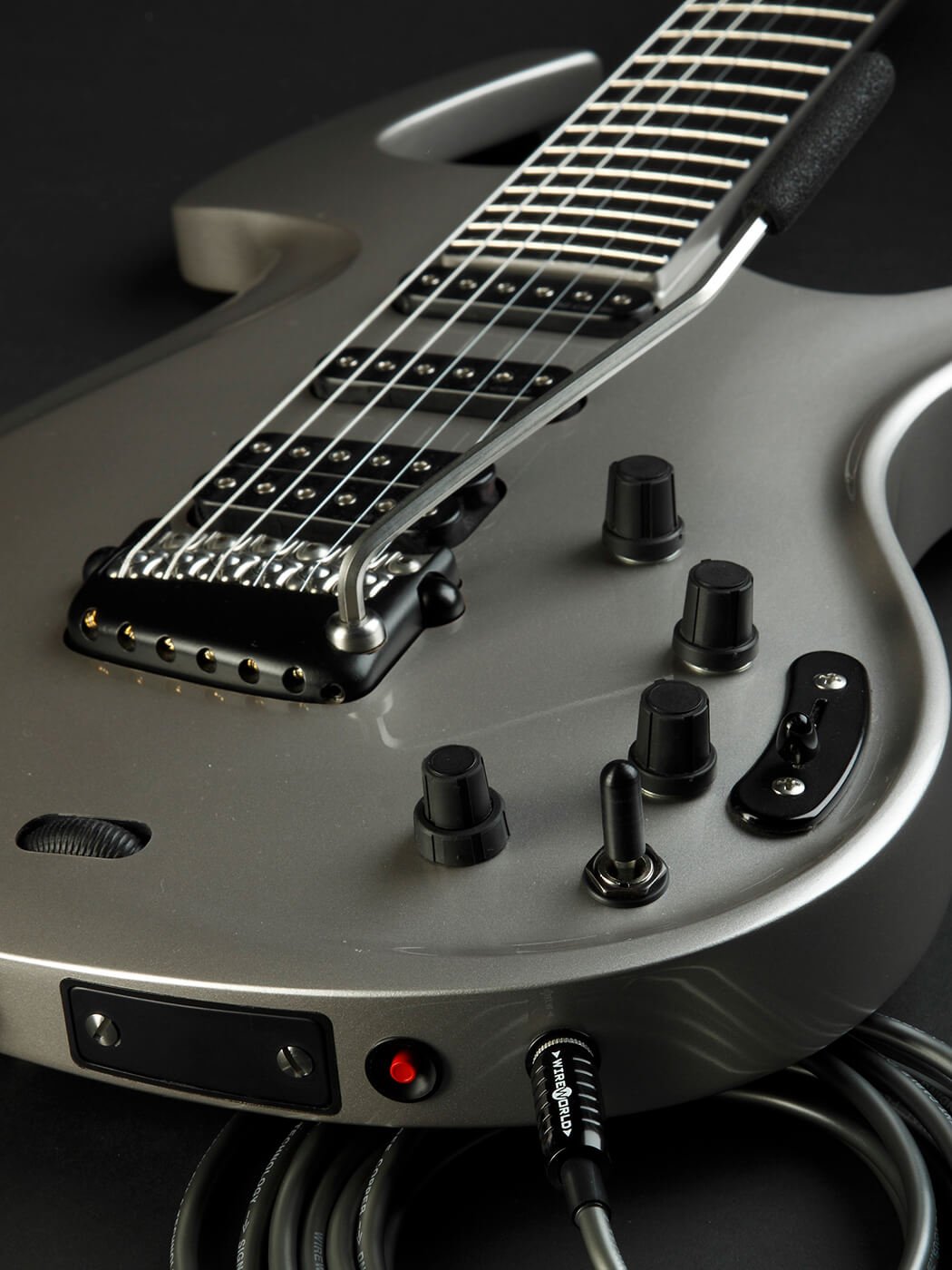
Then there was Fishman's half. Alongside two magnetic humbuckers sat a piezo pickup in the bridge, and the player could blend the two or send each to its own amp. Electric, and something close to acoustic, from one guitar at the flick of a switch. When the Fly launched it was billed as the first six-string to mix them.
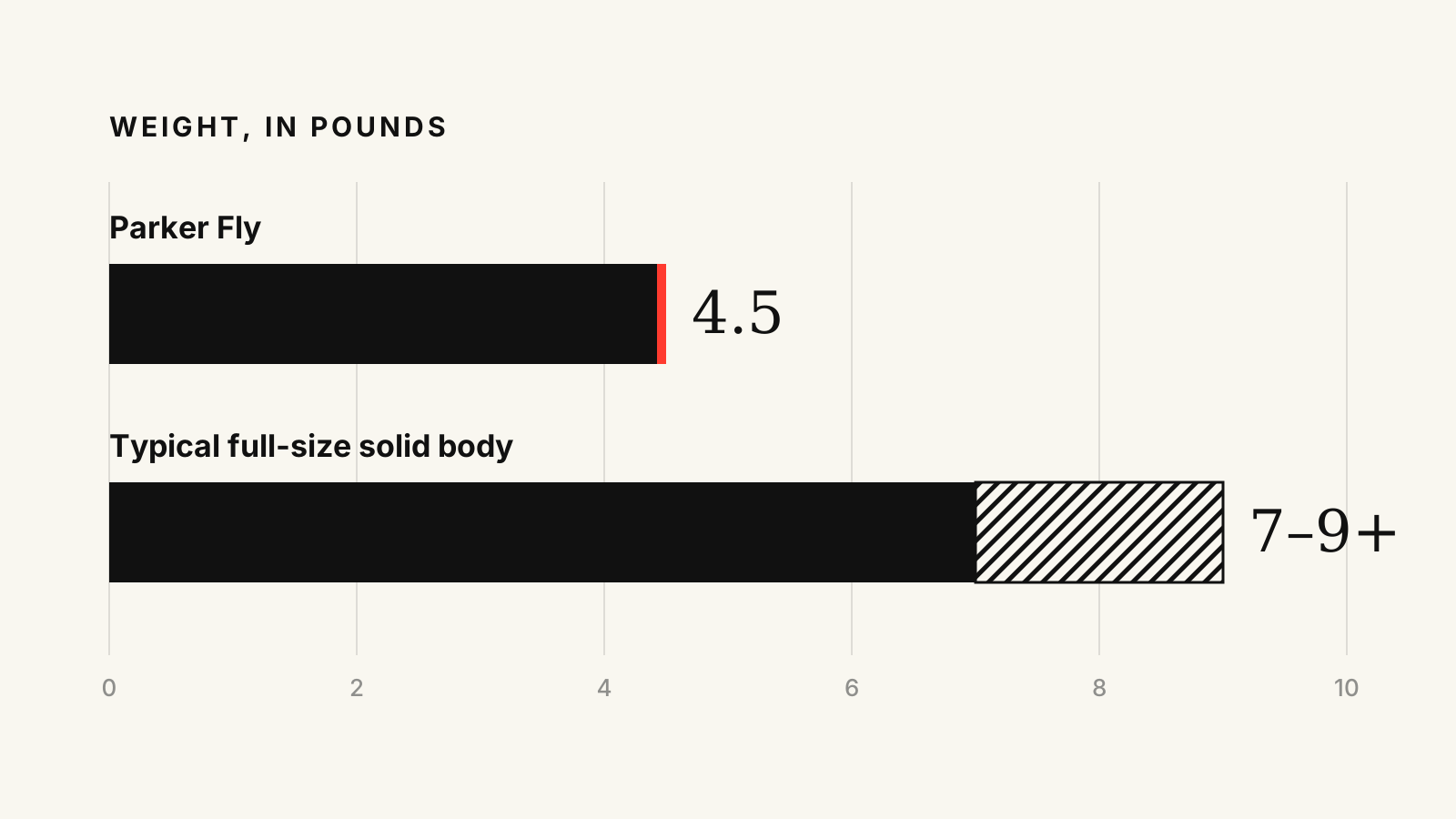
Nobody had to be told it looked strange. The long upper horn curls forward like driftwood, and the headstock is barely there. One early admirer told Parker it looked like he had found it on a beach, and also like it came from outer space.
Players cared less about the look than about what it did.
Joni Mitchell became its most famous owner, on a Fly Concert that was reportedly a factory second pulled from a pile at the Massachusetts shop. Parker fixed it up and fitted a Roland hexaphonic pickup so a VG-8 processor could give her alternate tunings without touching the pegs. She wanted something light. She got it.
Adrian Belew, who went on to a signature model, said Parker had spent twenty years eliminating everything that normally goes wrong with an electric guitar. “I swear this guitar never goes out of tune.”
Dave Navarro used the piezo to jump between the acoustic and distorted halves of “My Friends” live during his Red Hot Chili Peppers years. Matt Bellamy played one on Muse's early tours and on “Thoughts of a Dying Atheist.” Reeves Gabrels, Vernon Reid, Trent Reznor and Eddie Van Halen all turned up with one at some point.
David Lynch played his flat across his lap, a 1997 Fly wired to a Roland synth box, changing chords with his feet.
The company around the guitar had a less settled life.
Fender was among the firms that looked the design over first. Parker Guitars went to market instead under Korg USA, building Flys in Wilmington, Massachusetts. In 2003 it was sold to U.S. Music Corp., and Ken Parker left that September. The factory moved to the Chicago suburbs.
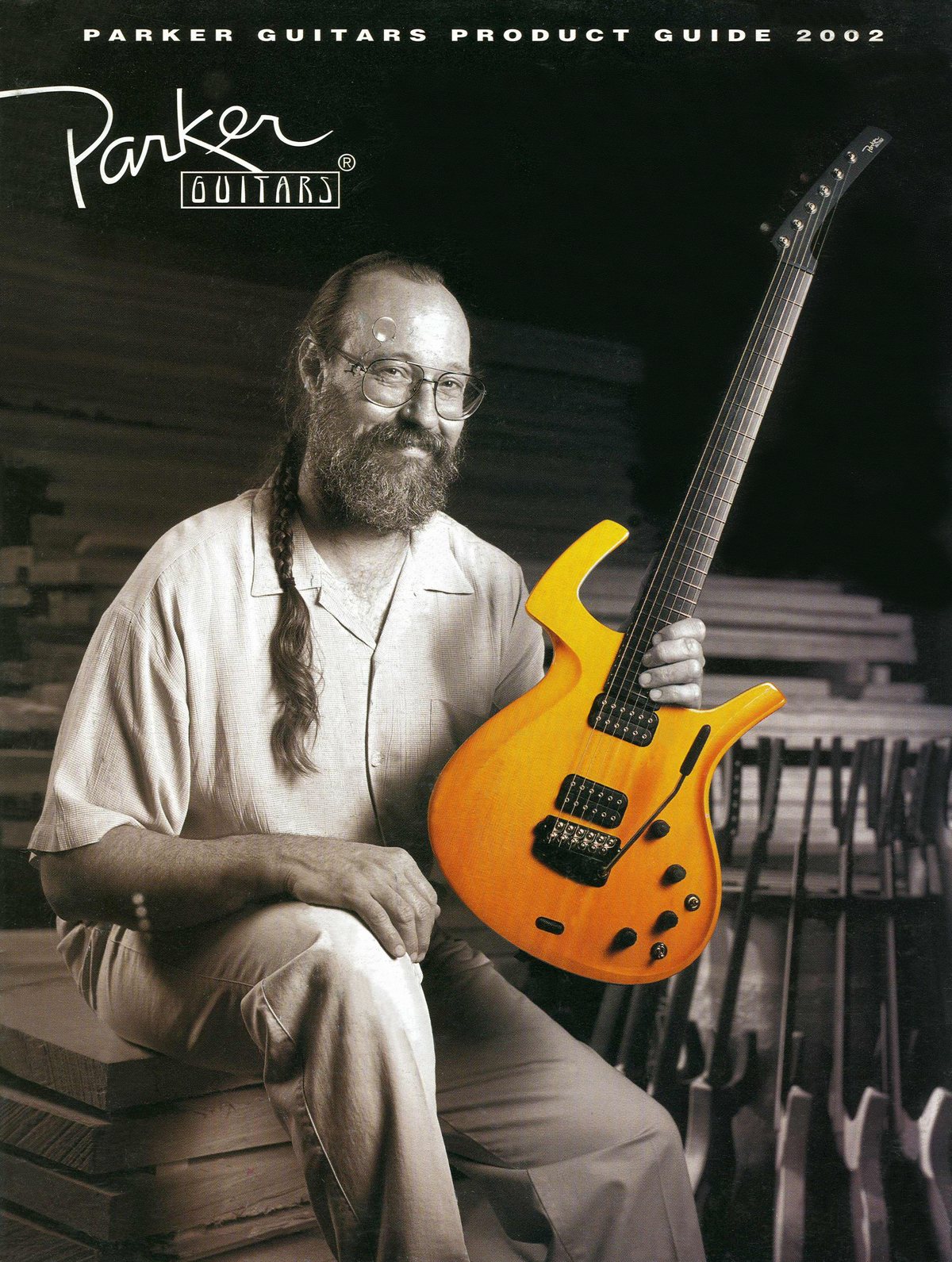
Collectors still divide the guitars at that line. The Ken Parker years are “pre-refined”; what came after is “refined.” The changes piled up, and by 2010 the MaxxFly had a conventional headstock, a tamer horn, 22 frets and a slightly heavier body.
Jam Industries of Montreal bought U.S. Music in 2009. In 2015 it announced that American production had stopped and that it was looking for a factory overseas. By November 2016 the Illinois plant was closed. No new Fly has been made since, and the trademarks sit quietly with a division of Jam.
Parker went back to archtops, the jazz guitars he had loved first, building a handful a year by hand with the same mix of old wood and new ideas. He died at home in Gloucester, Massachusetts, on October 5, 2025. He was 73.
The Fly was never going to replace the Stratocaster. It was an argument, made in carbon, that the guitar was not finished.
You can still find one, if you know where to look.
The Metropolitan Museum of Art holds an early prototype in rattle-can silver, carrying the first of Parker's stainless frets. The Smithsonian's National Museum of American History holds a 1997 Fly Classic.
The rest turn up on Reverb and eBay, and now and then at auction. Lynch's Fly sold at Julien's in June 2025 for $32,500, against an estimate of $4,000 to $6,000. A clean Deluxe from the 1990s was fetching around $3,000 to $3,500 a couple of years ago, and the early guitars are the ones people want.
Belew and Gabrels still play theirs. A group of owners runs the Fly Clone Project, documenting every change the guitar went through so that it can be repaired, and perhaps one day built again.
Pick one up if you get the chance.
Your arm will make the same mistake.