
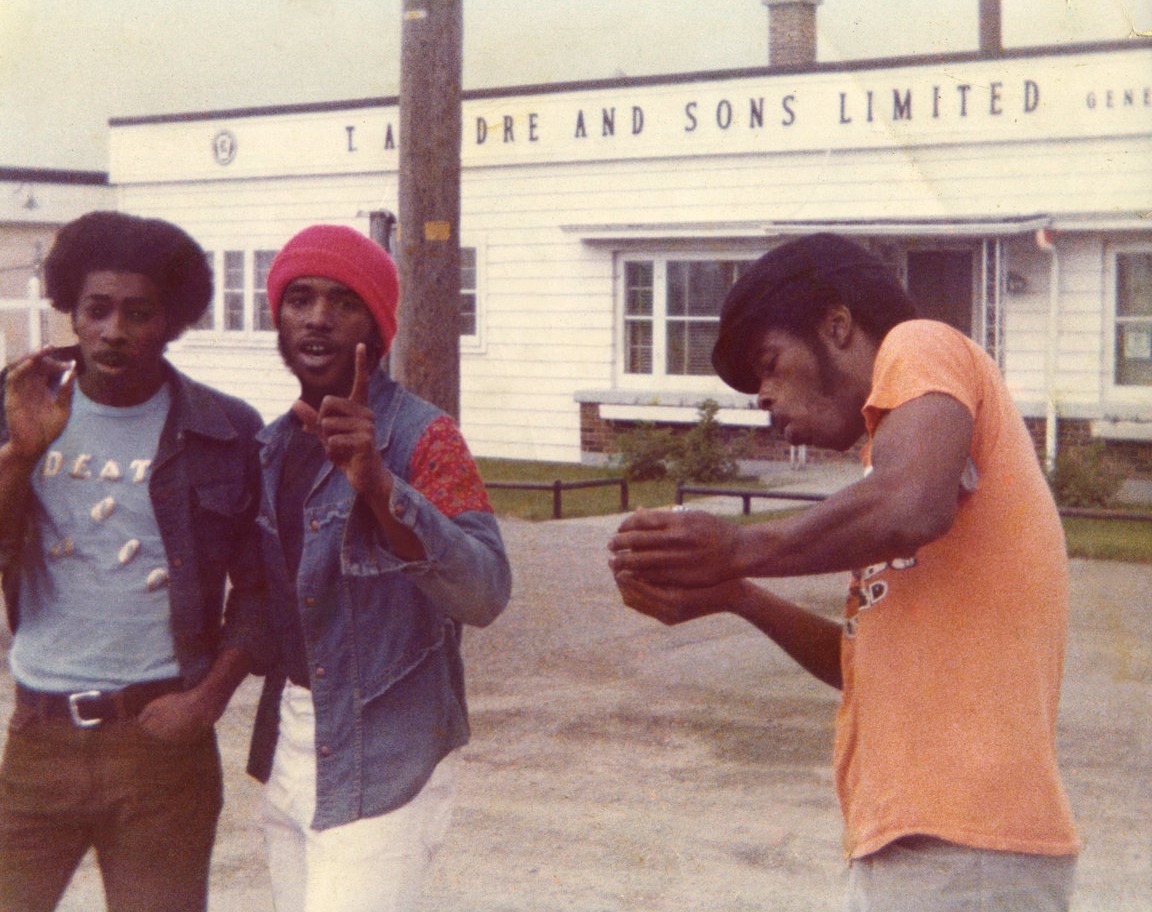
In the mid-1970s, three brothers in Detroit made a record that almost nobody heard. Bobby Hackney played bass and sang. David played guitar. Dannis played drums. They called themselves Death, pressed 500 copies of a single, and then, a few years later, the band was gone. The record was “Politicians in My Eyes.”
Today, it is difficult to hear it without knowing what came later. The guitar is abrasive, the rhythm section pushes hard, and Bobby's voice sounds impatient with the whole world. It has the velocity and tension we now associate with punk, even though punk, as a defined musical culture, had barely arrived. That is part of what makes the story of Death so strange.
The Hackney brothers grew up in Detroit surrounded by music. They started playing together in 1971, drawing initially from the funk and R&B that was everywhere around them. Then came the louder records. The Who and Alice Cooper were important influences, and David, the oldest brother, began pushing the band toward something much harder and more aggressive. They were not setting out to invent a genre. There wasn't really a genre to invent yet.
David came up with the name Death after the brothers' father was killed by a drunk driver while on his way to help an injured coworker. The name unsettled Bobby and Dannis. David insisted on it.
By 1975, Death had developed a sound of its own and recorded seven songs at United Sound Systems in Detroit. Columbia Records took an interest. There was a potential deal, but the label wanted one thing changed: the name. Death refused. The record contract disappeared.
It is tempting to turn that moment into a perfect rock-and-roll parable, but the rest of the story is less tidy. Death didn't immediately become a legendary underground band. They didn't influence a generation of musicians who were waiting for them to arrive. They simply kept going for a while, made a record, and eventually stopped.
The brothers pressed 500 copies of “Politicians in My Eyes” backed with “Keep on Knocking” on their own Tryangle Records label. The records circulated around Detroit, but Death never found a wider audience. By 1977, the band was finished.
Bobby and Dannis eventually moved to Vermont and played reggae in a group called Lambsbread. David moved back to Detroit in 1982. The seven songs from the United Sound sessions remained largely unknown. David died of lung cancer in 2000. He would not live to see the records become famous.
The rediscovery happened gradually. Interest in private-press records, garage rock and the forgotten edges of punk had grown considerably by the 2000s, and Death began turning up in conversations among collectors and musicians. The band's history also remained close to the family. Bobby and Dannis' sons were musicians themselves, helping reconnect the brothers with recordings that had been sitting outside the usual history of rock.
The 45 got expensive the way rare records do. Copies were reaching around eight hundred dollars by 2008, and the highest sale Discogs has on record for an original Tryangle pressing is $1,275, in October 2019. Five hundred were made; most of what a collector pays for is the four hundred and ninety-nine they cannot have.
Then, in 2009, Drag City released the seven United Sound recordings as ...For the Whole World to See.
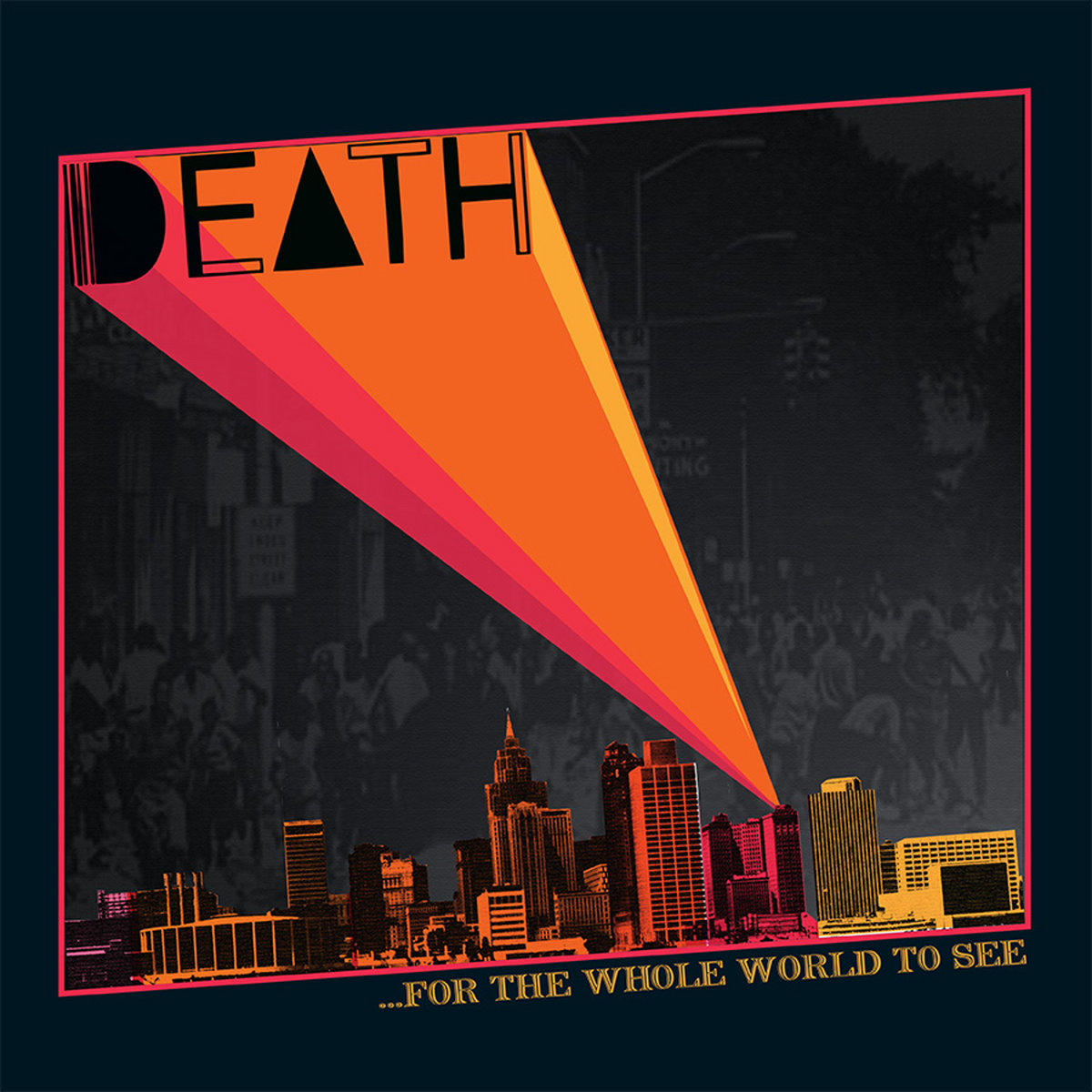
For the first time, people could actually hear the music easily. And the music held up. That matters more than the mythology. “Politicians in My Eyes” doesn't sound like an interesting historical curiosity that happens to have arrived early. It sounds like a band that meant it.
Drag City's copy for the reissue leans on two endorsements, and they are sales copy rather than reporting. Jack White, on first hearing the single: “Ahead of punk, and ahead of their time.” Mos Def, more bluntly: “pre-Sex Pistols, pre-Bad Brains, pre-all that shit, and nobody knows about them.” Both lines were written to move a record. Both are also doing the same work, which is to put Death on a timeline that had never kept a place for them.
The question of whether Death were a punk band is harder to settle. The word itself had not yet acquired the meaning it would have a few years later. Calling them “the first punk band” makes the history cleaner than it really was. What is undeniable is the timing. Three Black brothers in Detroit were making stripped-down, confrontational rock before the genre's familiar geography had been established. The conventional story of punk tends to run through New York and London. Death doesn't erase that history, but it makes it considerably less complete.
The rediscovery also brought a second life to the band. Bobby and Dannis eventually began performing again, carrying Death's music forward without David. In 2012, the story reached an even larger audience with A Band Called Death, a documentary by Mark Christopher Covino and Jeff Howlett. The film followed the brothers from Detroit to Vermont and back through the history of the band, the years in Lambsbread, the rediscovery of the recordings and the eventual reunion.
The sons are on the records now too. In November 2023 Drag City released a split seven inch shared between Death and Rough Francis, Death taking “World in Disguise” and Rough Francis “Haunted.” Urian Hackney produced it, Julian Hackney played guitar, and both Bobby Hackneys sing.
There is a tendency with records like this to make the story bigger than the music. The tiny pressing. The failed record deal. The band name. The decades of obscurity. The late recognition. All of it makes for a remarkable story.
But put the needle on the record and the mythology falls away. There are only three brothers playing. The guitar is loud. The drums are relentless. The bass is right underneath it. Bobby sounds furious.
Five hundred copies were made. For decades, almost nobody was listening. Now, “Politicians in My Eyes” is one of those records that seems to have arrived from somewhere slightly outside the official history of rock music. Not because it neatly proves that Death invented punk, but because it demonstrates how much music can exist without anyone paying attention to it.