Signal

The Rhythm of the Grid: Art of Manga Teaches You to Read in Sequence

More than 600 original manga drawings have come to the Brooklyn Museum, hung to be read right to left. Seen side by side, they show how panel, line and rhythm turn still black-and-white pages into cinematic worlds.

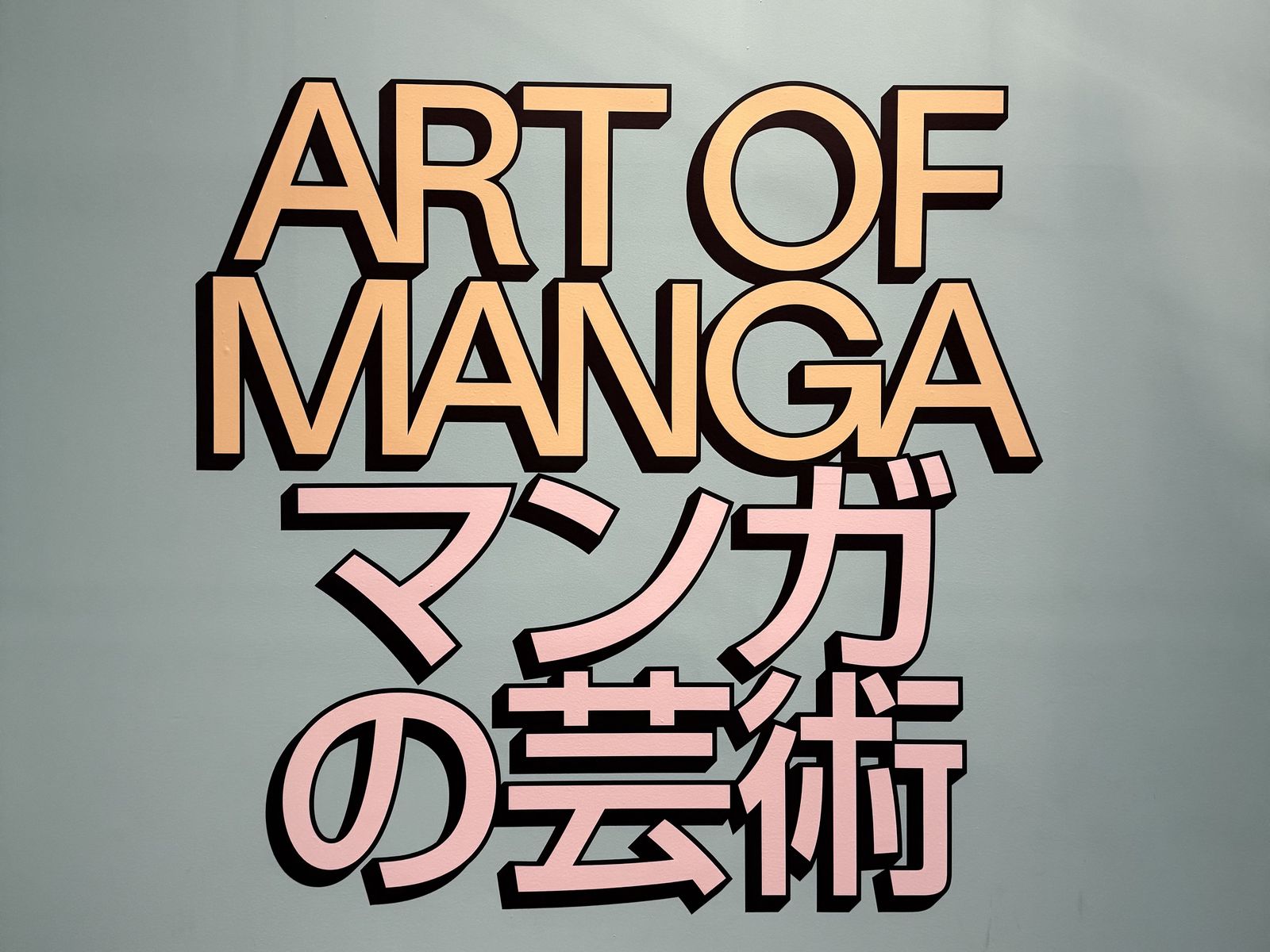
The exhibition title painted on a pale blue-green wall in heavy outlined letters: ART OF MANGA in peach, and マンガの芸術 in pink beneath it.
The exhibition’s title wall.·Jane Smarovozova

Few exhibitions offer a chance to experience an art form backwards. Opening October 3, 2026, at the Brooklyn Museum, Art of Manga brings together more than 600 original drawings, including never-before-seen sketches from some of Japan’s best-selling manga series, offering rare insight into the craft behind a global cultural phenomenon.

The experience begins in a room designed like an oversized manga page, introducing visitors to the medium’s distinctive visual language. Following a right-to-left path, the exhibition reveals how artists use line, framing and composition to convey movement, sound and emotion, transforming still, black-and-white drawings into cinematic worlds.

Seen side by side, the drawings demonstrate how panel size, spacing, and rhythm shape the reader’s experience.
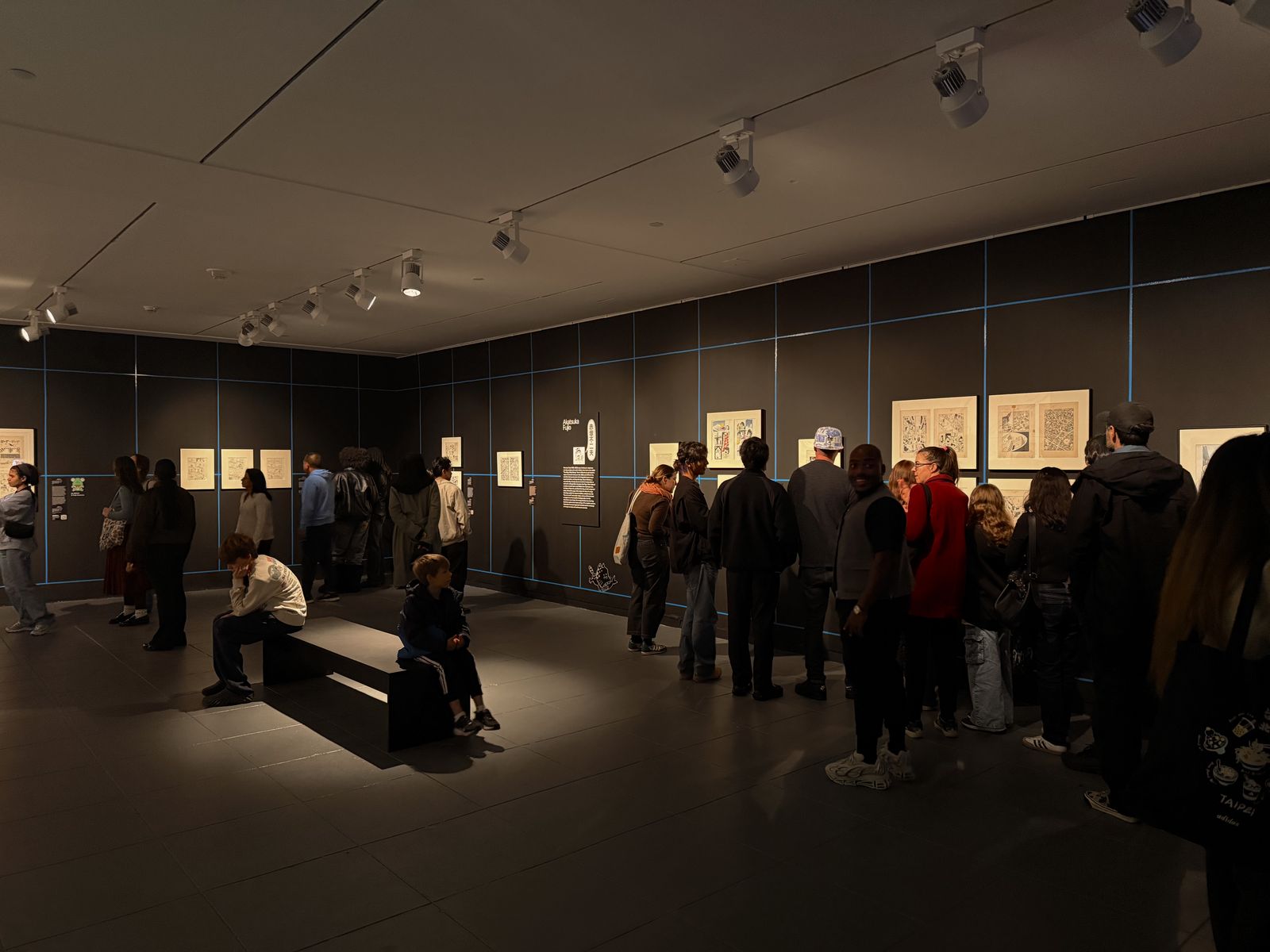
Visitors crowd a dim gallery whose black walls are ruled in a bright blue grid, like the panel borders of a manga page. Framed drawings hang in the squares, and a panel headed Akatsuka Fujio, with his name in Japanese in a speech bubble, stands at the centre.
The Akatsuka Fujio gallery, its walls ruled into panels.·Jane Smarovozova

The exhibition features eight celebrated mangaka, or manga artists, including Araki Hirohiko (JoJo’s Bizarre Adventure), Oda Eiichiro (One Piece), Takahashi Rumiko (Inuyasha) and Yoshinaga Fumi (Ōoku: The Inner Chambers). Each section reveals a different approach to storytelling, from the exaggerated humor of Akatsuka Fujio to the intricate drama of historical fiction. Seen side by side, the drawings demonstrate how panel size, spacing, and rhythm shape the reader’s experience.
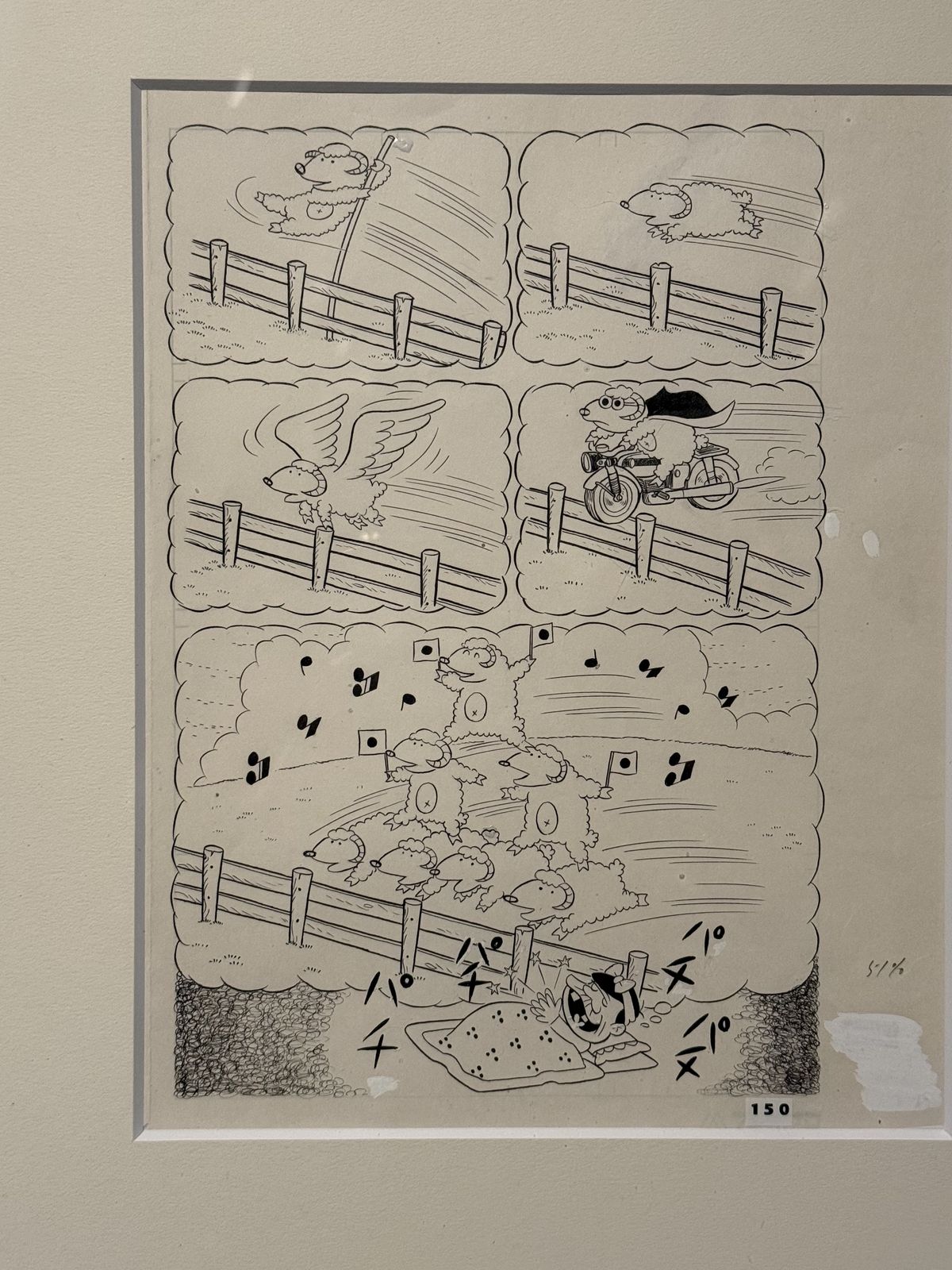
A framed black-and-white manga page of five panels: sheep leap a wooden fence, one with wings and one on a motorbike, and in the large bottom panel a whole flock streams over the fence above a figure asleep under a blanket, with sound effects written in katakana.
An original gag page by Akatsuka Fujio, Insomnia - Dreamland: Tensai Bakabon 1974·Jane Smarovozova

What makes the show especially compelling is its focus on the creative process. These original drawings, rarely seen outside the publishing industry, reveal the artists’ distinctive linework, revisions, and even editors’ annotations. Some works have never been exhibited before, offering an intimate look at the craftsmanship and collaboration behind stories enjoyed by millions.
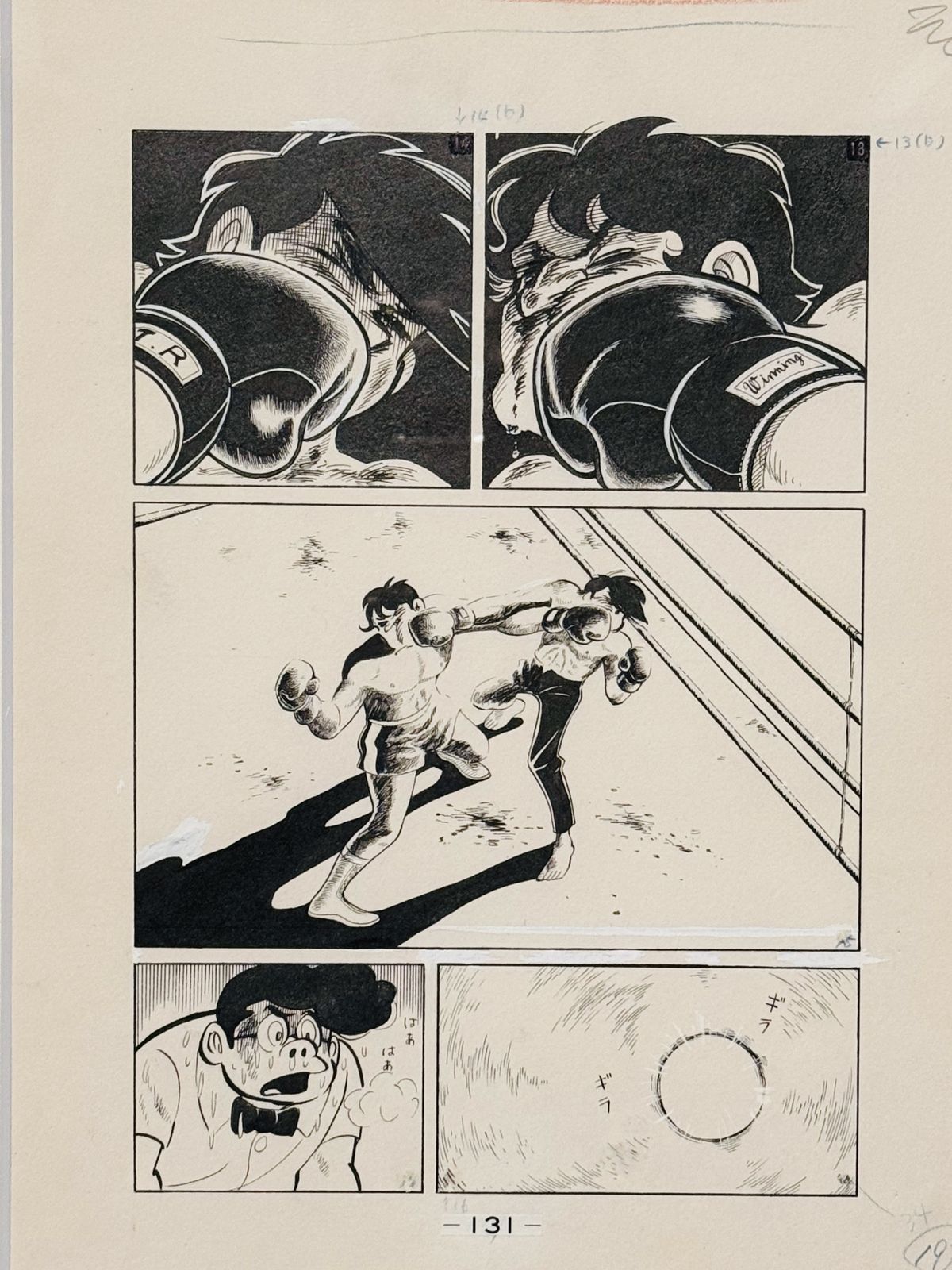
An original black-and-white manga page of a boxing match: two close-ups of fighters behind their gloves, a wide panel of one landing a punch in the ring, and below, a startled man in a bow tie beside a circle of blurred light. Small pencil numbers sit in the margins beside the panels.
Hand drawing from Ashita no Joe: Fighting for Tomorrow by Asao Takamori, Tetsuya Chiba, 1968·Jane Smarovozova

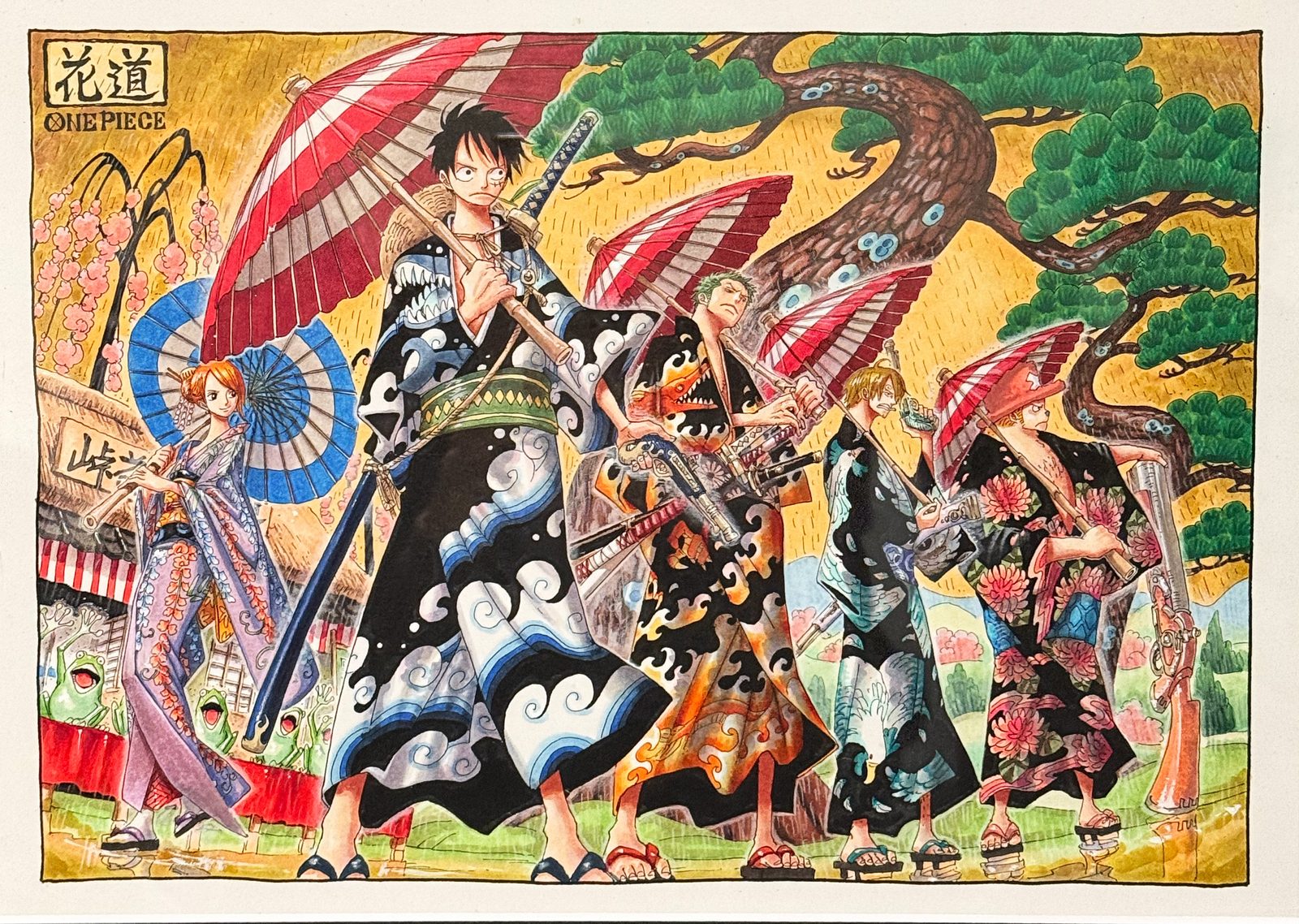
At the heart of the exhibition, a reading library of manga volumes supplied by Kinokuniya invites visitors to pick up a book and explore the medium firsthand. The show concludes with art prints from One Piece, The Rose of Versailles and Bleach, alongside works from Keiichi Tanaami’s collaboration with Akatsuka Fujio.
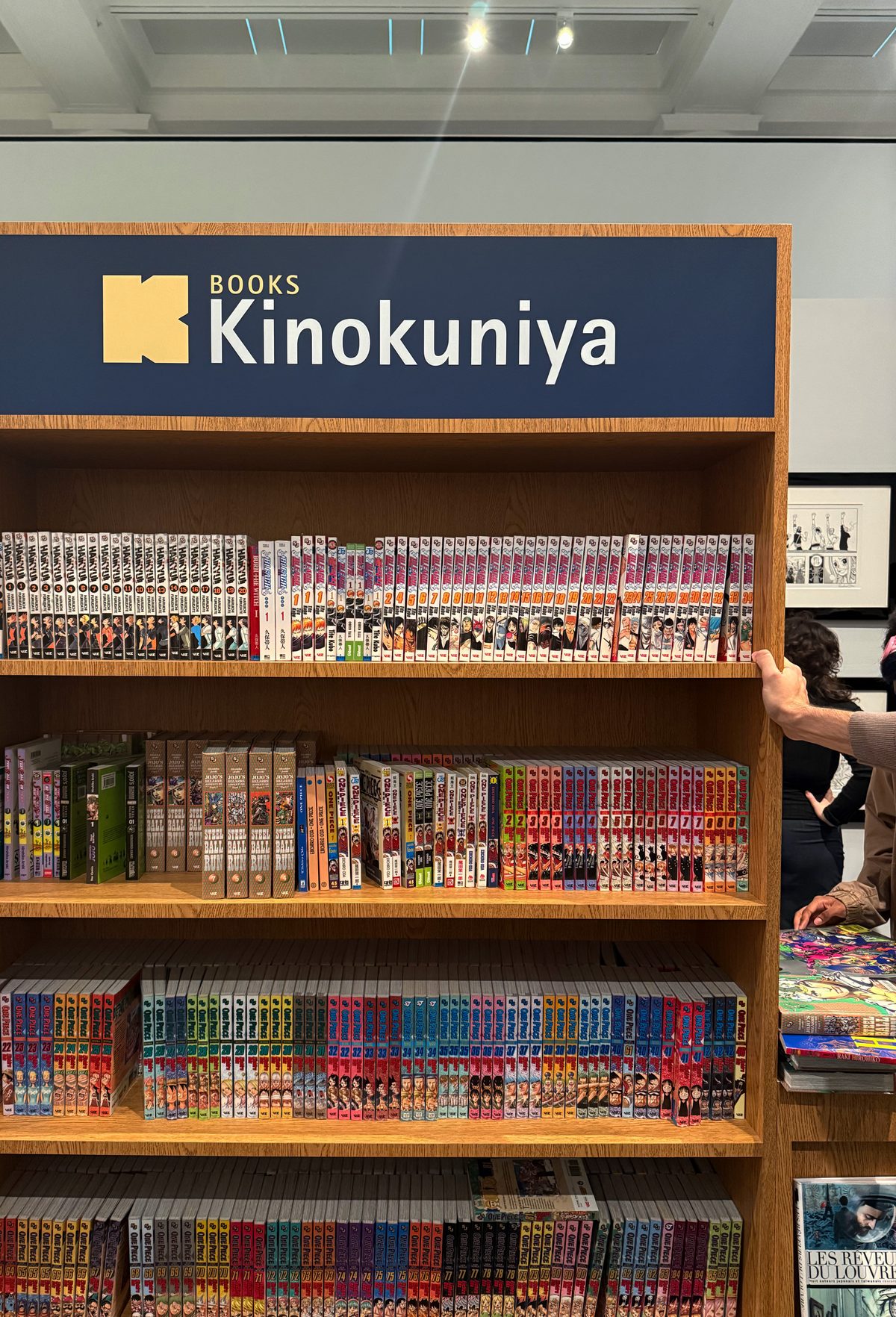
A tall wooden bookcase headed with a navy Kinokuniya Books sign, its shelves packed with rows of manga volumes in bright spines. At the right edge a visitor reaches for the shelf, and framed black-and-white drawings hang on the gallery wall behind.
The Kinokuniya shelves, where visitors can take down a volume and read.·Jane Smarovozova
A framed colour print from One Piece: Luffy, Zoro, Nami, Sanji and Chopper in patterned kimono walk in a line beneath red-and-white paper umbrellas, against a gold ground with a twisting pine and cherry blossom. The characters 花道 sit in a box in the top left corner above the One Piece logo.
An art print from One Piece by Oda Eiichiro, in the closing section of the show.·Jane Smarovozova

Organized by the Fine Arts Museums of San Francisco, where it debuted at the de Young in 2025, Art of Manga makes its East Coast debut at the Brooklyn Museum, where it runs through January 31, 2027. A companion exhibition, Manga Before Manga, explores the art form’s roots in the museum’s Great Hall.
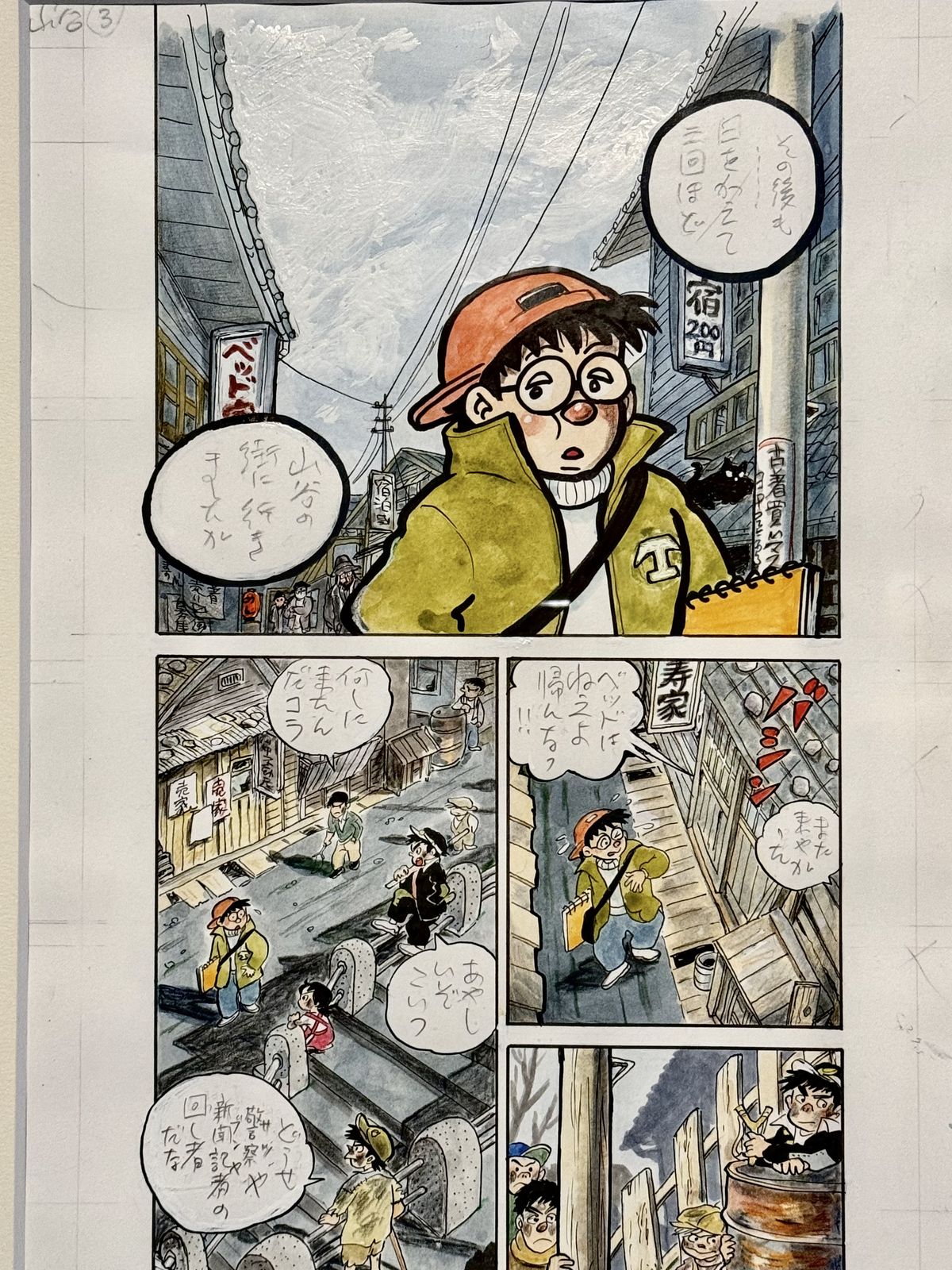
An original colour manga page. In the large top panel a young man in round glasses, an orange cap and a green jacket stands in a narrow street of old wooden buildings and shop signs, with speech balloons in Japanese around him. Smaller panels below follow him through crowded lanes.
Hand drawing from A Diary of a Quiet Life by Chiba Tetsuya, 2015·Jane Smarovozova
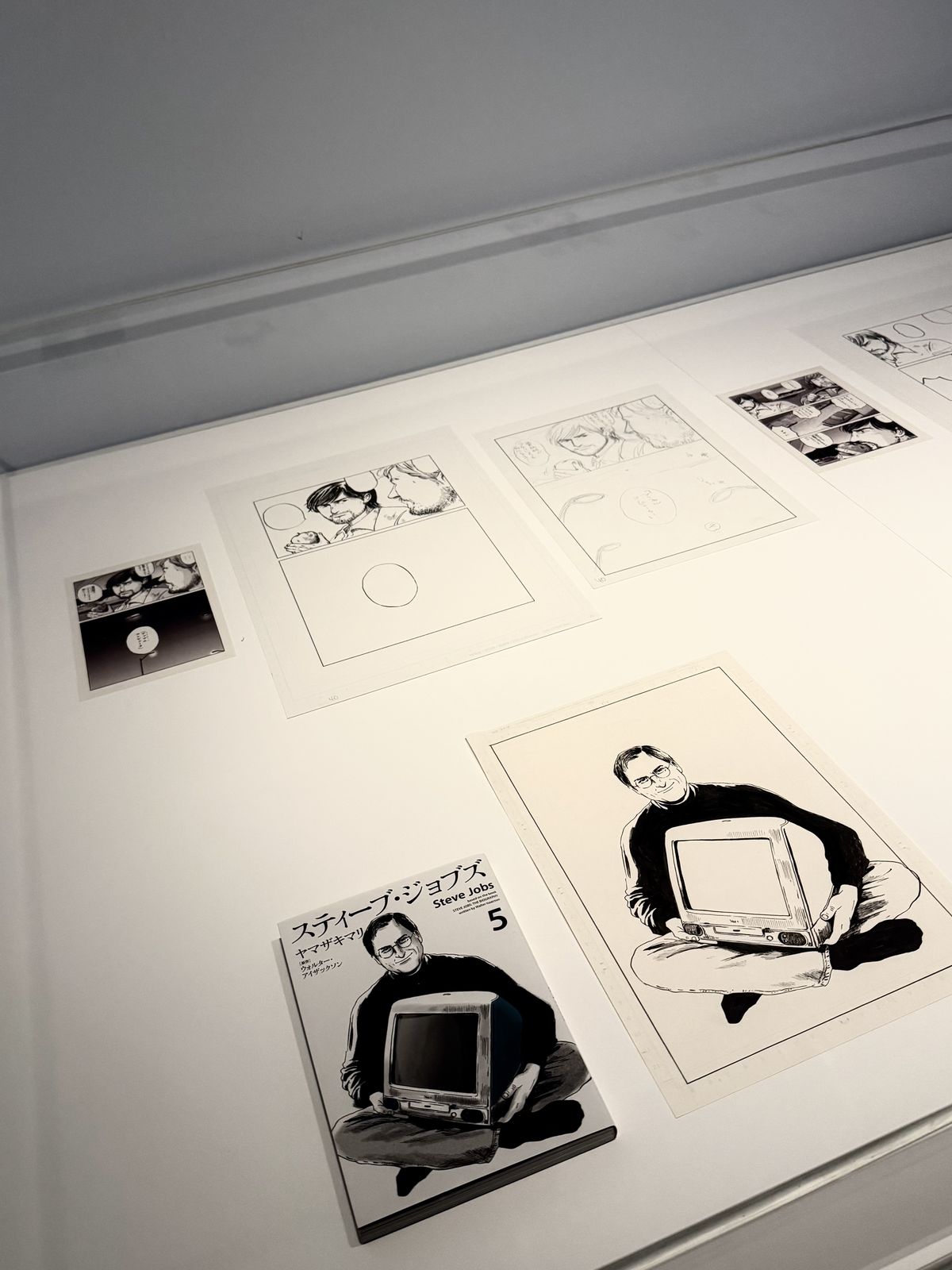
A vitrine of original drawings. In front, the ink drawing of Steve Jobs sitting cross-legged with an iMac in his lap lies beside the printed volume 5 cover that uses it, titled Steve Jobs in English and Japanese; pencilled and inked pages are laid out behind.
Cover illustration for volume 5 of Steve Jobs by Yamazaki Mari, 2016·Jane Smarovozova

Timed-entry tickets start at $30 and include general museum admission. Located at 200 Eastern Parkway, the museum is a short walk from the 2/3 train.
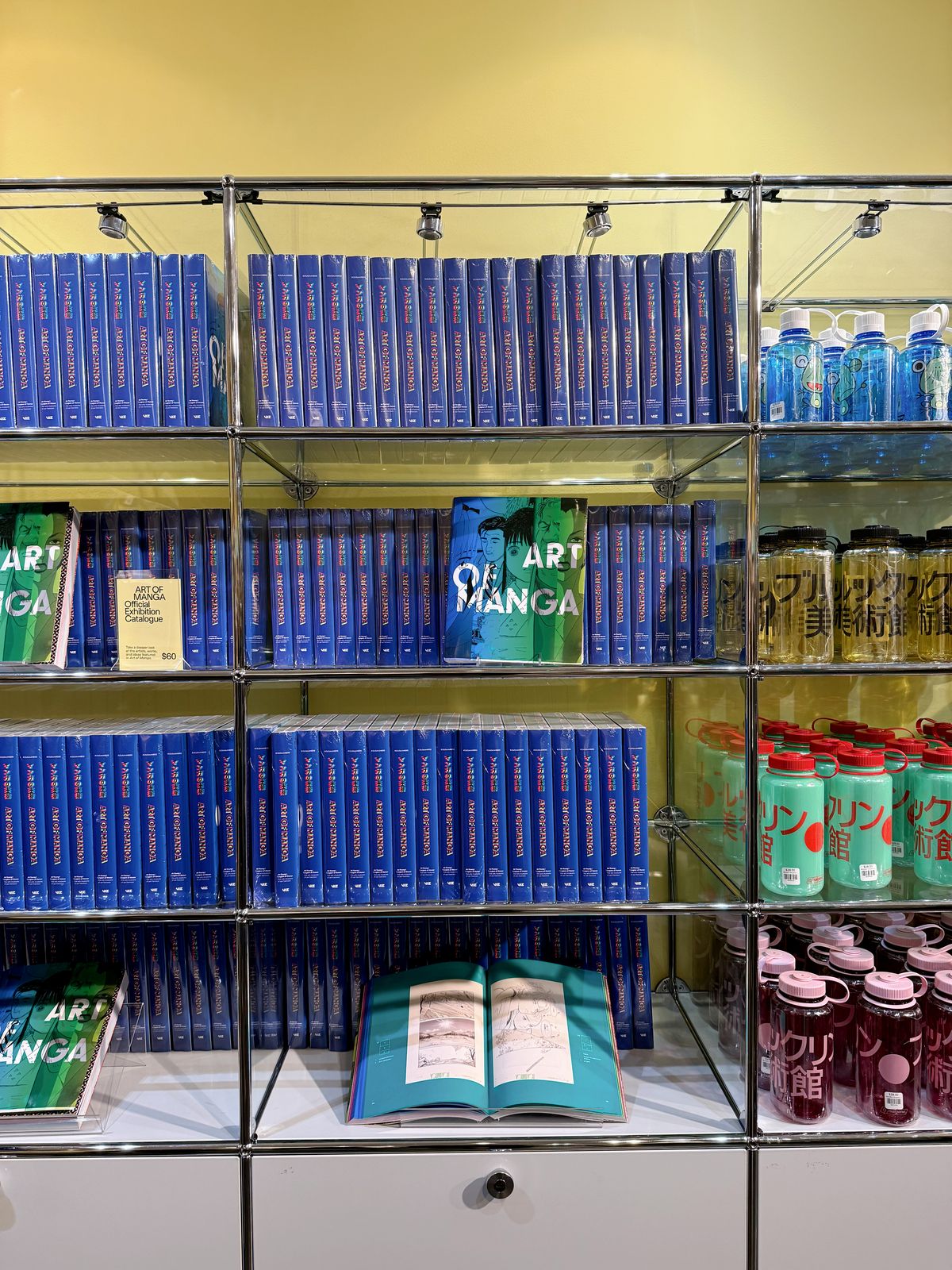
Glass shelves in the museum shop stacked with blue-spined copies of the Art of Manga catalogue, one open on the lower shelf, beside rows of water bottles printed with Japanese lettering.
The exhibition catalogue from the Brooklyn Museum Gift Shop.·Jane Smarovozova

More than a celebration of manga’s worldwide popularity, the exhibition offers a rare opportunity to see how its most iconic stories take shape. Arrive with an open mind, and the visual language of manga begins to reveal itself, one panel at a time.